

The Webinar Subcommittee has put together an exciting series of webinars to spark your curiosity, expand your knowledge, and of course, collect those CE credits.
Learning Formats: The structure for webinars is approximately 45-50 minutes of lecture followed by a question and answer session, facilitated by members of the Webinar Subcommittee. Webinars are hosted via Zoom Webinars through learn.aaop.org, our learning platform. All webinars are recorded and posted for self-study by learners who are unable to attend the live event.
Cost: Access to learn.aaop.org is free for all users. Registration for webinars is free for AAOP Members and $25 for non-members. If you need assistance navigating the learning platform, please email office@aaop.org.
Cancellation Policy: Participants can cancel their registration up to 30 days in advance and receive a full refund. Those who pay for registration for the live webinar but are unable to attend may transfer their registration to view the recording as a self-study activity.
AAOP foresees no reason to cancel webinars, but in the event that a cancellation occurs, all paid registrants will receive a full refund.
The schedule that appears here is as current as possible and will be updated as speakers and topics are confirmed. The schedule is subject to change.
Upcoming Webinars
Wednesday, September 16, 2026 at 8:00pm ET
The Sleepless OSA Patient: What Dental Sleep Providers Need to Know About COMISA
Comorbid insomnia and sleep apnea (COMISA) affects approximately 30% to 50% of patients with obstructive sleep apnea (OSA) and is often underrecognized despite its significant clinical impact. Rather than simply representing the coexistence of two sleep disorders, COMISA is a distinct condition in which insomnia and OSA interact bidirectionally, contributing to hyperarousal, unstable breathing patterns, and disrupted sleep.
Patients with untreated COMISA experience worse health outcomes, including increased cardiovascular and metabolic risks, impaired daytime functioning, and lower adherence to treatments such as CPAP and oral appliance therapy. For dental sleep medicine practitioners, recognizing COMISA early is critical to selecting appropriate patients, improving treatment acceptance, and achieving better long-term results.
This presentation reviews the underlying physiology and unique challenges of COMISA and provides practical approaches for identifying insomnia symptoms in patients with OSA. By improving detection and management of COMISA, clinicians can better address patient needs and support more successful treatment outcomes.
Learning Objectives
- Review the unique physiology of comorbid insomnia and sleep apnea (COMISA)
- Understand the impact of untreated COMISA on patient health and treatment success
- Identify ways to identify and manage COMISA in the dental sleep practice
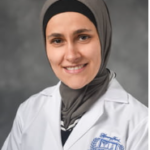 Miriam Jaziri, MD
Dr. Miriam Jaziri is a Sleep Medicine Physician at Henry Ford Hospital and Wayne State University, where she serves as Program Director of the Henry Ford Health Sleep Medicine Fellowship. She completed her medical training at the University of Utah and her residency and fellowship at Henry Ford. Her clinical and academic work focuses on improving early detection of obstructive sleep apnea in underserved and high‑risk populations, including pregnant patients, and on strengthening interdisciplinary pathways between medical and dental providers. She has peer‑reviewed publications on treatment‑emergent central sleep apnea and OSA screening initiatives, and is committed to advancing collaborative, patient‑centered approaches to sleep‑disordered breathing.
Wednesday, October 7, 2026 at 8:00pm ET
Diagnosis of Overlapping Orofacial Pain Diseases & Disorders
Deriving an accurate diagnosis is the most critical and challenging step in managing orofacial pain (OFP). When overlapping conditions co-occur – such as TMD, primary headaches, and neuropathic pain – symptoms frequently mimic dental pathology, leading to misdiagnosis or inappropriate interventions. This webinar explores the clinical challenges of overlapping OFP disorders, the application of diagnostic taxonomies (e.g., ICOP & DC/TMD), and the role of diagnostic provocations, local anesthetic blocks, and advanced diagnostic imaging in disentangling complex presentations.
Learning Objectives:
- Understand the high prevalence of overlap between temporomandibular disorders (TMD), primary headaches, and neuropathic pain.
- Identify key diagnostic pitfalls caused by terminology, non-operationalized criteria, and sensory abnormalities in overlapping OFP disorders.
- Utilize provocation testing and diagnostic blocks to isolate specific pain generators in complex, multi-site orofacial pain presentations.
- Formulate a structured differential diagnosis algorithm that accounts for peripheral drivers, central nervous system modulation, and comorbid conditions.
 Donald Nixdorf, DDS, MS
After graduating from the University of Alberta Faculty of Dentistry, Dr. Nixdorf completed hospital dentistry residency at, Anesthesia fellowship at Johns Hopkins University, Orofacial Pain fellowship at the University of Alberta, and a Master of Science in Clinic Research at the University of Minnesota. As a Diplomate of the National Dental Board of Anesthesiology (NDBA) and the American Board of Orofacial Pain (ABOP), he maintains a specialty Orofacial Pain practice on the diagnoses and management of chronic TMD pain, headaches, and neuropathic pain within multi-disciplinary settings.
Dr. Nixdorf’s research has focused on the topics of non-odontogenic “tooth” pain from a classification, diagnosis, epidemiology, and treatment perspectives, as well as TMD and most recently dental MRI, with over 85 published articles.
Dr. Nixdorf is Professor, Division Director, and past Graduate Program Director at the University of Minnesota in the Division of TMD & Orofacial Pain.
 AnaMaria-Mirabela Korman, DMD
Tuesday, January 12, 2027 at 8:00pm ET
Cognitive Behavioral Therapy for Insomnia
Description and Learning Objectives Coming Soon
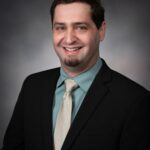 Ian Boggero, PhD
Dr. Boggero is the Director of Psychological Services and Director of Research at the University of Kentucky Orofacial Pain Clinic. He completed his undergraduate education at UCLA and obtained his Ph.D. in clinical psychology from the University of Kentucky, with a graduate certificate in biostatistics. He did a clinical internship at the Lexington VA and after his Ph.D. he completed a two-year postdoctoral fellowship at Cincinnati Children’s Hospital Medical Center where he worked with children and families with chronic pain. A practicing clinical psychologist, Dr. Boggero’s research interests are in developing brief psychological interventions for improving pain, sleep, and fatigue in patients with chronic pain. He has over 100 combined publications/presentations and over 2,000 citations, and has been invited to give talks across the country and the world on psychological management of chronic orofacial pain. Currently, he is conducting an NIH-funded randomized clinical trial to test brief psychological interventions for chronic masticatory muscle pain. He is also the chair of the Research Committee of the American Academy of Orofacial Pain and a board member of the Kentucky Psychological Association. In his spare time, he enjoys spending time with family, playing soccer, hiking, cooking, reading, and playing chess online.
 Gary Klasser, DMD
Previous Webinars – Available for Self-Study!
Beyond Hot Flashes: The Oral Impact of Menopause
Menopause is often discussed in terms of hot flashes, sleep changes, and other systemic symptoms, but its impact on oral health is less recognized. This presentation will highlight key studies that explore oral changes that may accompany perimenopause and menopause, and their effects on quality of life. The discussion will also focus on how dental professionals can recognize these changes, consider potential contributing factors, and provide appropriate patient centered care for women during this stage of life.
Learning objectives:
- Identify oral and facial signs & symptoms that may emerge or worsen during perimenopause and menopause
- Apply an interdisciplinary, patient-centered approach when addressing the oral and systemic health needs of menopausal women
- Advocate for greater awareness of oral health as part of menopause education and wellness initiatives
 Seema Kurup, DDS, MS
Dr. Kurup is an Associate Professor and Division Chair, Oral Medicine and Orofacial Pain, Department of Oral & Maxillofacial Diagnostic Sciences, at the University of Connecticut School of Dental Medicine. As Course Director and one of three board certified Orofacial Pain specialists in Connecticut, she leads the academic curricula for Orofacial Pain & TMD at the school and the OFP clinical service for the school and the community. She is also the Course Director for Oral Medicine & Oral Pathology Course for Dental Hygienists at Connecticut State, Tunxis Community College, CT.
Dr. Kurup holds dual Fellowships of the American Academy of Orofacial Pain (AAOP) and American Academy of Oral Medicine (AAOM) She is a Council Member of the AAOP and Chair of the Mentorship Committee of the AAOP. Dr. Kurup is an active member in 9 national/international dental and professional associations with several publications and is a peer reviewer for 10 scientific journals. Prior to coming to the US, she had an extensive career in academia and hospital settings in the specialty of Oral Medicine and General Dentistry in India, Middle East and the Far-East countries.
Dr. Kurup’s research interests are in TMD, Orofacial Pain conditions and Oral Mucosal Conditions. She has served as Subject Matter Expert in the Department of Public Health funded initiative to educate dental providers in OFP management in Connecticut and is Clinical Review Team member of the Connecticut Comprehensive Pain Center.

The American Academy of Orofacial Pain is an ADA CERP Recognized Provider
ADA CERP is a service of the American Dental Association to assist dental professionals in identifying quality providers of continuing dental education. ADA CERP does not approve or endorse individual courses or instructors, but does not imply acceptance of credit hours by boards of dentistry.
AAOP designates webinars for 1 continuing education credit each.
